Your furnace sat untouched all summer while the swamp cooler or AC did the work. Then one cold October night you flip it on — and it smells funny, won’t light, or barely warms the house. That’s the worst possible time to discover a problem. A fall tune-up is how you avoid it.
Here’s what a furnace tune-up actually includes, what it costs in Albuquerque, and why booking early matters more than most homeowners think.
Key Takeaways
- ENERGY STAR recommends a professional pre-season check-up every year, with heating systems serviced in the fall (ENERGY STAR, 2026).
- A standard tune-up covers a heat-exchanger safety check, burner cleaning, filter change, electrical and safety-control testing, and a full system run.
- Most manufacturer warranties require documented annual maintenance — skip it and you can void coverage.
- Book in late summer or early fall: Albuquerque techs fill up fast once the first cold snap hits.
Is a Furnace Tune-Up Really Worth It?
Yes — a yearly tune-up pays for itself in efficiency, reliability, and safety. ENERGY STAR’s maintenance checklist advises having a contractor perform annual pre-season check-ups, with heating systems checked in the fall, to keep the system at peak performance (ENERGY STAR, 2026). A furnace that’s clean and correctly adjusted burns less fuel to make the same heat.
There’s a safety piece too. Gas furnaces produce carbon monoxide, and a cracked or dirty heat exchanger can let it into your home. A tune-up includes a safety inspection specifically to catch that. And there’s a money angle most people miss: many manufacturer warranties require proof of annual professional maintenance, so skipping tune-ups can leave you paying full price for a repair that should’ve been covered.
The efficiency and lifespan gains are real, too. ENERGY STAR’s checklist calls out cleaning components and tightening electrical connections because dirt and loose wiring make a system draw more power for the same output (ENERGY STAR, 2026). A furnace with clean burners and a properly tuned blower moves heat more efficiently — lower bills across the season — and it tends to last longer, because small stresses don’t get years to quietly compound.
As of 2026, ENERGY STAR’s home maintenance checklist recommends an annual professional check-up for heating and cooling equipment — cooling systems in spring, heating systems in fall — to keep them running at peak performance and efficiency (ENERGY STAR, 2026). Regular servicing also catches small problems before they turn into cold-night breakdowns.
What’s Included in a Furnace Tune-Up?
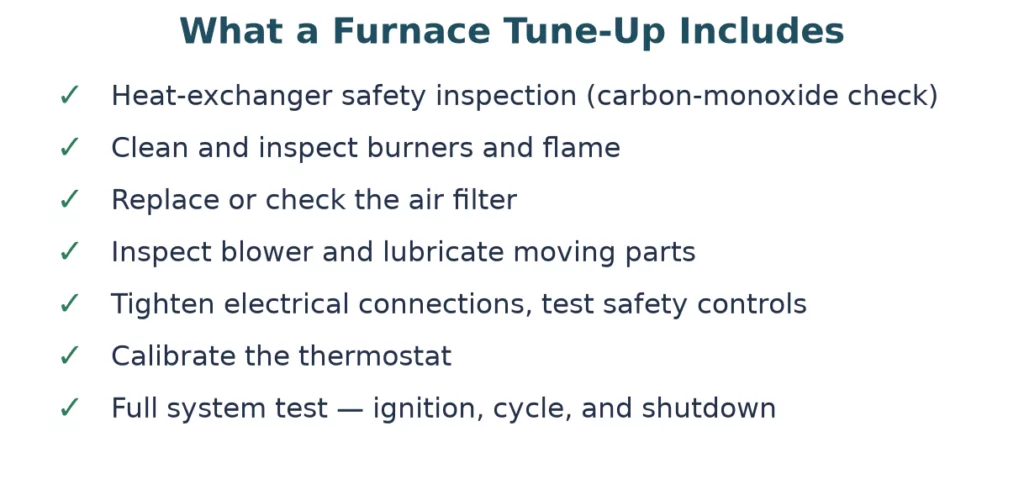
A proper tune-up is a multi-point inspection, not a quick glance. A technician cleans, tests, and adjusts the parts that affect safety, efficiency, and reliability. ENERGY STAR’s checklist highlights several of these — cleaning coils, checking electrical connections and motor current, and inspecting the system — because dirty or loose components waste energy and can be unsafe (ENERGY STAR, 2026).
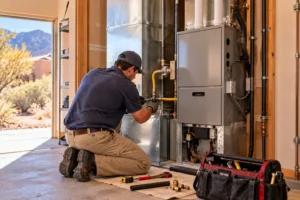
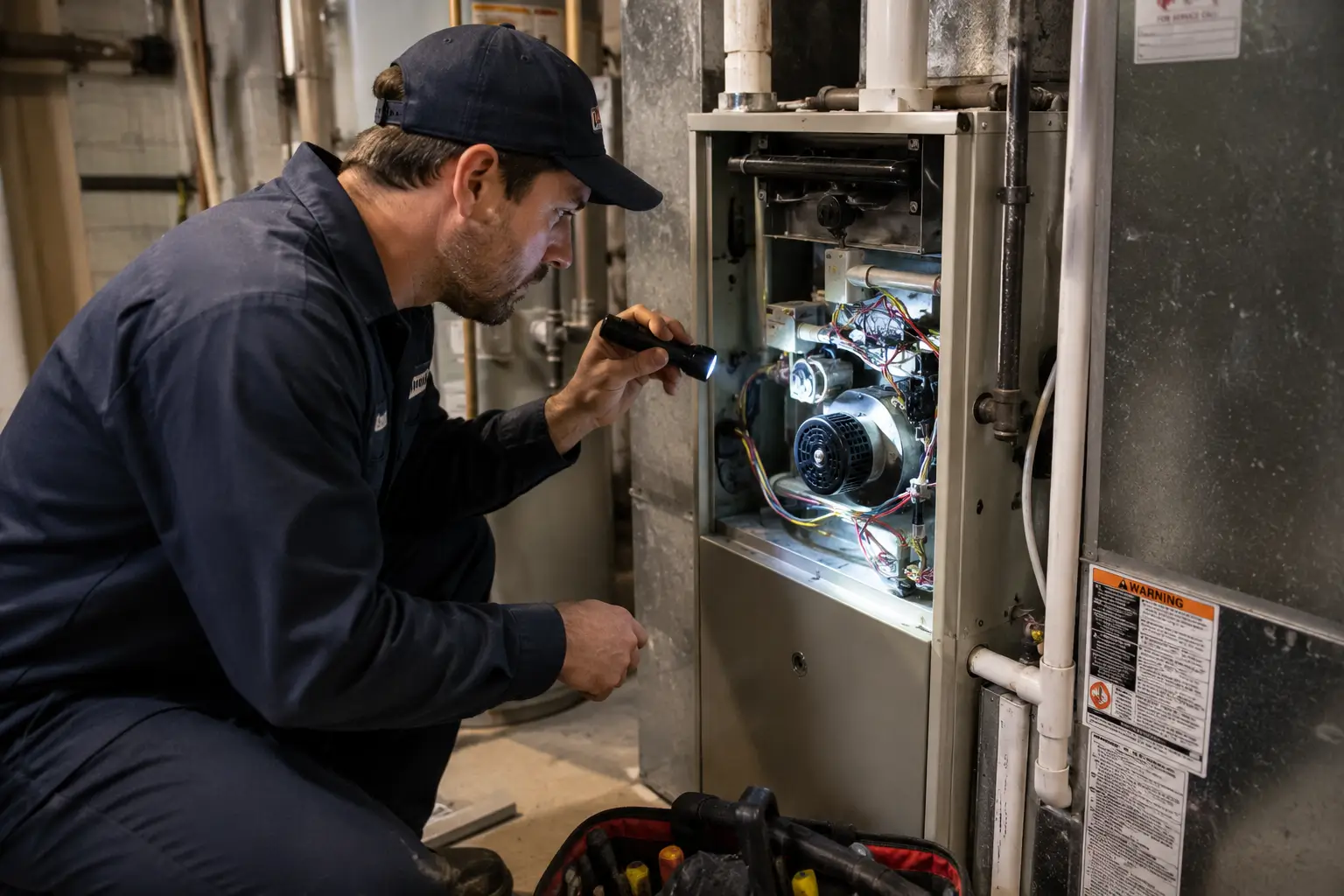
Here’s what our techs actually do on a fall furnace visit. After a long idle summer, the two things we catch most are dust-caked burners and a heat exchanger that needs a close safety look.
The heat-exchanger inspection is the one you can’t skip. It’s the metal chamber that keeps combustion gases separate from the air blown into your home, and a crack lets carbon monoxide leak where you breathe it. A technician checks it closely and tests for CO — an easy step to overlook right up until the moment it matters.
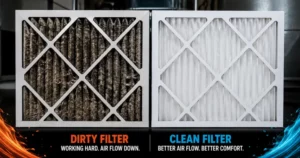
The filter change matters more than it sounds. A clogged filter chokes airflow, which makes the furnace work harder and can even overheat it. If you want to keep tabs between visits, our HVAC maintenance plan bundles the seasonal tune-ups and filter checks so nothing slips.
How Much Does a Furnace Tune-Up Cost in Albuquerque?
A standard furnace tune-up in the Albuquerque area typically runs in the low hundreds of dollars — most single-system homes land in roughly the $90–$200 range, depending on the system and what the visit turns up. It’s one of the cheapest pieces of HVAC maintenance you can buy, and it’s a fraction of what a mid-winter emergency repair costs.
Two things lower the effective price. First, bundling: a maintenance plan usually includes one or two tune-ups a year plus repair discounts, so the per-visit cost drops. Second, timing — a planned fall tune-up avoids the premium you’ll pay for an emergency call on the first freezing night. Want an exact quote for your system? Give us a call at (505) 569-6939.
What makes the price move within that range? Mostly the condition of your system and whether the visit turns up anything that needs correcting — a worn igniter, a dirty flame sensor, a tired capacitor. Those are inexpensive parts on their own, but catching them during a scheduled tune-up is far cheaper than a mid-January no-heat call, where you’re paying emergency rates on top of the repair.
Why Schedule Before Winter?
Because the calendar and the phones are against you if you wait. ENERGY STAR specifically recommends servicing heating systems in the fall, before you rely on them (ENERGY STAR, 2026). In Albuquerque, the first hard freeze usually lands in mid-to-late October — and that’s exactly when everyone calls at once.
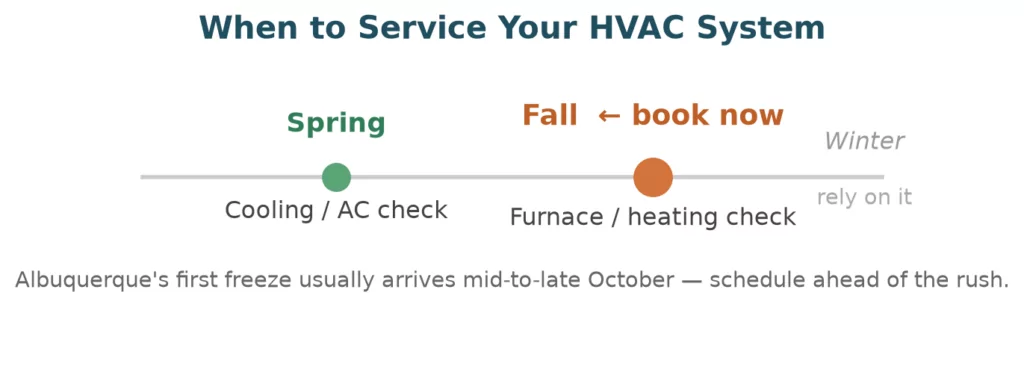
Booking in September or early October means you set the appointment on your schedule, not on a freezing Saturday when every HVAC company in town is slammed. It’s the difference between a routine visit and an emergency premium.
There’s an Albuquerque wrinkle worth knowing, too. A lot of local homes run a swamp cooler and a furnace that share the same blower and ductwork. Fall is the natural handoff — you drain and shut down the cooler for winter and bring the furnace online — so it’s the ideal moment to have a tech button up the cooler and tune the furnace in one visit. Handling both at once saves a second trip and makes sure the switchover doesn’t leave a surprise waiting in the ducts.
Signs Your Furnace Needs Attention Now
Don’t wait for the tune-up if your furnace is already acting up. A few warning signs mean you should call sooner rather than later. Catching these early is usually the difference between a small fix and a no-heat emergency.
Watch for a burning or musty smell that doesn’t fade, short cycling (turning on and off rapidly), a yellow or flickering burner flame instead of steady blue, weak or uneven heat, rising gas bills, or banging and rattling noises at startup. A yellow flame in particular can signal incomplete combustion, which is both inefficient and a safety concern.
If you ever smell gas or a strong, persistent burning odor, don’t try to troubleshoot it yourself — shut the furnace off, open a window to ventilate, leave, and call a professional right away (and your gas utility if it smells like gas). Most of the other signs aren’t emergencies, but they’re all your furnace telling you it wants a look before you’re leaning on it every night. The earlier you call, the more likely it’s a quick fix instead of a full replacement.
If your furnace won’t stay lit, our guide to why a furnace won’t stay lit walks through the usual causes — and if it’s an older unit, it may be time to weigh when to replace the furnace.
DIY Maintenance vs. What Needs a Pro
You can handle the easy upkeep yourself; leave the combustion, gas, and electrical work to a licensed technician. Doing your part between visits keeps the system healthier and your tune-up shorter.
On your list: change the air filter regularly, keep the area around the furnace clear, make sure supply and return vents aren’t blocked, and keep an eye (and nose) out for the warning signs above. On the filter specifically, ENERGY STAR suggests checking it monthly and changing it at least every three months — more often in dusty Albuquerque or if you have pets (ENERGY STAR, 2026). It’s the single easiest thing you can do to keep the furnace breathing and your tune-up short. On the pro’s list: the heat-exchanger inspection, burner cleaning, gas-pressure and combustion checks, electrical testing, and carbon-monoxide safety verification. Those require tools, training, and a license — and getting them wrong is dangerous. When it’s time for the professional side, call (505) 569-6939 and we’ll handle it.
The Bottom Line for Albuquerque Homeowners
A fall furnace tune-up is cheap insurance: it keeps your system efficient, protects your warranty, catches safety issues, and heads off the mid-winter breakdown that always seems to happen at the worst time. ENERGY STAR recommends it every year, and in Albuquerque the smart move is to book before the October rush.
Ready to get on the schedule? Call Beyond Heating & Cooling at (505) 569-6939 or explore our residential heating services and maintenance plans to keep your whole system covered year-round.
Frequently Asked Questions
How often should I service my furnace?
Once a year. ENERGY STAR recommends an annual professional pre-season check-up, with heating systems serviced in the fall (ENERGY STAR, 2026). Annual service keeps the furnace efficient, protects most manufacturer warranties, and catches safety issues like a cracked heat exchanger before winter.
What’s included in a furnace tune-up?
A standard tune-up covers a heat-exchanger safety inspection, burner cleaning, filter replacement, blower and lubrication checks, tightening electrical connections, thermostat calibration, and a full system test. ENERGY STAR’s checklist emphasizes cleaning components and checking electrical connections because dirt and loose wiring waste energy and can be unsafe (ENERGY STAR, 2026).
How much does a furnace tune-up cost in Albuquerque?
Most single-system homes pay roughly $90–$200 for a standard furnace tune-up, depending on the system and what the visit finds. Bundling it into a maintenance plan lowers the per-visit cost, and a planned fall tune-up avoids the premium of an emergency mid-winter call.
When is the best time for a furnace tune-up?
Fall — before you depend on the furnace. ENERGY STAR recommends servicing heating systems in the fall (ENERGY STAR, 2026). In Albuquerque, book in September or early October so you’re ahead of the first freeze and the seasonal rush of no-heat calls.
Can a tune-up really prevent a breakdown?
It sharply reduces the odds. Most winter no-heat failures trace back to dirty, worn, or misadjusted parts that a tune-up catches and corrects. Regular maintenance also keeps the system running efficiently, so it works less hard on the coldest nights when strain causes failures.
Sources
- ENERGY STAR, “Maintenance Checklist,” retrieved 2026-07-15, https://www.energystar.gov/saveathome/heating-cooling/maintenance-checklist