All Types of Vent Cleaning for Albuquerque Homes, Explained
All types of vent cleaning cover four different jobs: the supply and return registers on your walls and floors, the ductwork behind them, the dryer exhaust vent, and the flue that carries furnace combustion gases outside. Each job fixes a different problem, from dust and lint to blocked exhaust. In Albuquerque’s dry, dusty air, knowing which one your home needs keeps you from paying for the wrong service.
Key Takeaways
- Vent cleaning and duct cleaning are different jobs. Registers are the surface, and ducts are the system behind them.
- The EPA recommends duct cleaning when ducts are visibly contaminated with mold, dust or debris, not on a schedule.
- Clear dryer vent lint at least yearly, because failure to clean dryers is a leading factor in dryer fires.
What’s the difference between vent cleaning and air duct cleaning?
Vent cleaning usually means the registers, grilles and the short runs just behind them. Air duct cleaning covers the whole supply and return system, including trunk lines, the blower and the coils. Ads use the terms loosely, so ask which parts a quote includes.
The U.S. Environmental Protection Agency’s guidance on duct cleaning says there is no evidence that duct cleaning improves health. It recommends cleaning when ducts are visibly contaminated with mold, dust or debris. We work the same way. We look first, then tell you whether a register cleaning is enough or the system needs a full cleaning. Dryer vents and furnace flues are separate jobs again.
Which vents does your home have, and what does cleaning each one involve?
Most Albuquerque homes have four kinds of vents, and each one is cleaned differently. The dryer vent matters most for safety. The NFPA clothes dryer safety tip sheet advises cleaning lint from the vent pipe and the area around it at least once a year. Our dryer vent cleaning safety guide covers that job in detail.
| Vent type | What it carries | What cleaning involves | When to act |
|---|---|---|---|
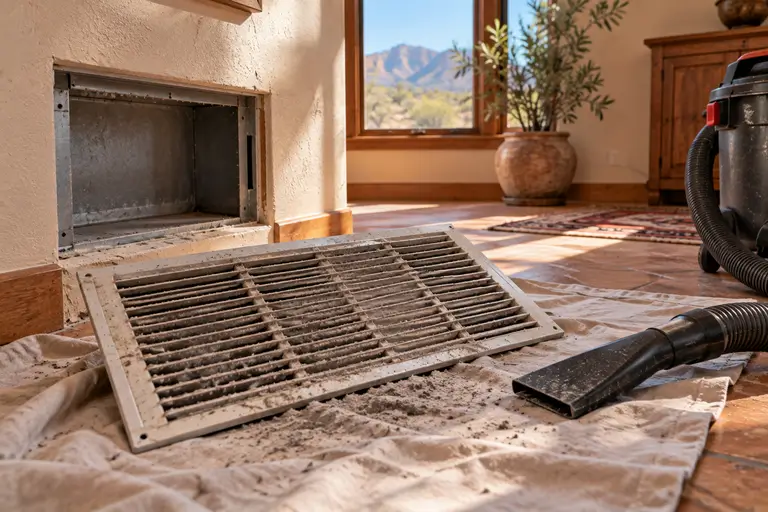
| Supply and return registers | Conditioned air in and out of rooms | Remove grilles, wash them, vacuum the first section of duct | Dust buildup on the grilles |
| Air ducts | All the air your system moves | Negative-pressure vacuum plus brushes, with blower and coil cleaning | Visible mold, dust or debris |
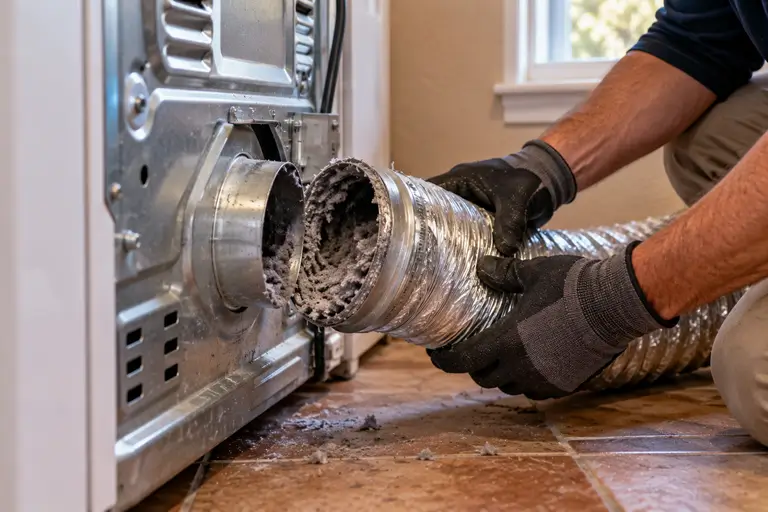
| Dryer exhaust vent | Hot, lint-laden air to the outside | Disconnect the duct, clear the lint, check the outside hood | At least yearly, or sooner if you see signs |
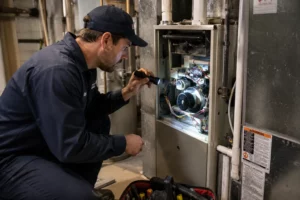
| Furnace or water heater flue | Combustion gases to the outside | Inspect and clear it as part of heating service | Soot, rust or a poor draft |
What are the main methods for cleaning ducts and vents?
Duct and vent cleaning uses a few different methods, chosen by what’s in the system and what the ducts are made of. The right method depends on what is in the system and what the ducts are made of. These are the main methods:
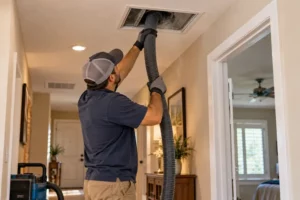
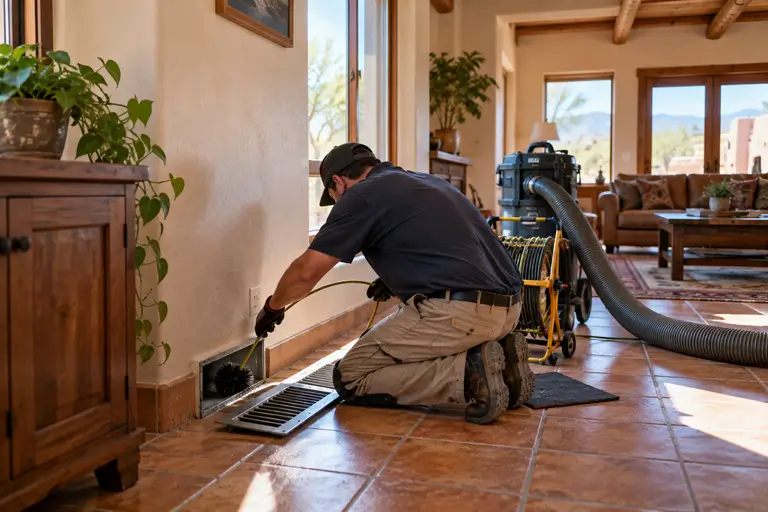
- Negative-pressure source removal: a powerful vacuum keeps the ducts under suction while tools loosen debris, so the dust leaves the house instead of blowing into it.
- Rotary brushing: spinning brushes on flexible cables scrub rigid metal runs.
- Hand cleaning: registers, the blower wheel and the coils are removed or cleaned in place.
- Dryer exhaust cleaning: the Building America Solution Center’s dryer exhaust guide explains how to remove lint from the duct and restore airflow.
Flex duct needs gentler tools than rigid metal. You can see how we run each job on our vent cleaning process page.
What are the signs your dryer, furnace or chimney vent needs cleaning?
A vent needs attention when airflow drops, heat or odor builds up where it shouldn’t, or you can see debris. Watch for these signs:
- Clothes that take longer to dry, or an outside dryer hood flap that stays shut.
- A hot laundry room or a burning smell while the dryer runs.
- Lint around the dryer door or the outside vent.
- Soot or rust near the furnace or water heater flue.
- Dust puffing from the registers at startup, or visible mold in the ducts.
NFPA research on home dryer fires reports that failure to clean dryers is a leading factor in those fires, so treat dryer signs as urgent. A flue sign calls for a heating service visit and a working carbon monoxide alarm. Our post on vent cleaning covers flue concerns in more depth.
How does Albuquerque’s dry, dusty climate affect your vents?
Dry air and windy days push fine dust into high-desert homes, and it settles in the returns, filters and ducts. Evaporative coolers add to the problem. They pull outside air through wet pads and into the house, so grit and pad debris can end up in the ducts, and damp spots can feed mold. Homes that run a swamp cooler in summer and a furnace in winter often share ductwork, so one season’s dust carries into the next.
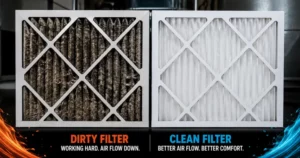
Your filter is the first defense. Our guide on how often to change your air filter in Albuquerque covers the timing.
We have been family-operated since 2018, working in homes from Rio Rancho and Placitas down to Los Lunas and east to Moriarty and Edgewood.
What drives the cost of vent cleaning?
None of the sources checked for this guide publishes a price, so I won’t quote one. How much it costs to get your vents cleaned depends on these factors:
- Which job: a dryer vent is a smaller job than whole-system duct cleaning.
- Home size: more registers and returns mean more time.
- Access: attics, crawlspaces and roof-exit dryer vents add labor.
- Duct type and condition: flex duct, crushed runs or disconnected sections change the work.
- Contamination: heavy dust, pests or mold take longer.
- Add-ons: blower and coil cleaning or repairs.
For duct pricing in more depth, read our Albuquerque air duct cleaning cost article. Financing is available for larger jobs.
What should you ask a vent cleaning company before you book?
Ask what the quote covers, how the work is done and who holds the license. Before you book, ask:
- Which vents and parts of the system are included?
- Will you inspect first and show me the contamination?
- What equipment do you use, and how do you protect the ducts?
- What is your New Mexico license number?
- Is this a written price, or can it change once you start?
Be wary of bargain whole-house offers that turn into upsells. Beyond Heating and Cooling is a licensed contractor, license #410899. Our residential vent cleaning service covers heating and cooling vent cleaning across the metro. Call (505) 382-1344 and ask about same-day service.
Frequently Asked Questions
Do AC ducts need to be cleaned?
Only when there’s a reason. The EPA recommends cleaning when ducts are visibly contaminated with mold, dust or debris, not on a fixed schedule. If your real concern is allergies or stale air, our indoor air quality services may address it better than duct cleaning.
Can you be in the house during duct cleaning?
Yes. Most homeowners stay home while we work. Expect noise from the vacuum and brushes, and the system stays off during the cleaning. If anyone in the house has asthma or dust sensitivity, staying in a room away from the work area is a sensible choice.
What are the downsides of duct cleaning?
Poor work can stir up dust without capturing it, damage flex duct, or disturb mold without fixing the moisture that caused it. Cleaning doesn’t seal leaky ducts, and the EPA notes it has no proven health benefit. Hire a company that inspects first and uses negative pressure.
Sources
- Should You Have the Air Ducts in Your Home Cleaned?, U.S. Environmental Protection Agency, retrieved 2026-09-26
- Clothes Dryer Safety Tip Sheet, National Fire Protection Association, retrieved 2026-09-26
- Home fires involving clothes dryers and washing machines, National Fire Protection Association, retrieved 2026-09-26
- Clean Dryer Exhaust, Building America Solution Center, retrieved 2026-09-26