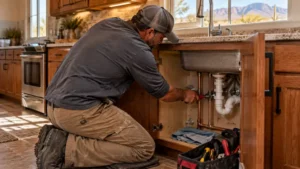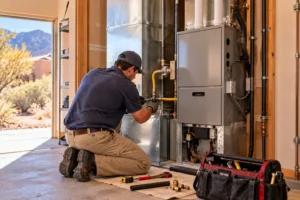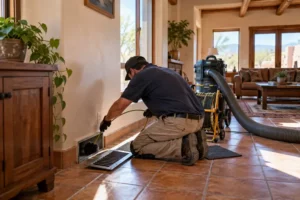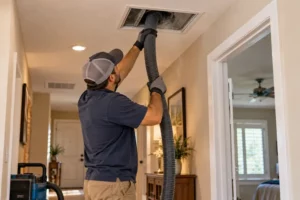
If you’ve spent a summer in Duke City, you know that a functional air conditioner isn’t a luxury—it’s a survival tool. But in 2026, the landscape of HVAC repair costs is shifting. Between new federal energy standards and the unique environmental toll that Albuquerque’s high-desert silt and monsoon dust take on outdoor units, homeowners are often left wondering what a fair price actually looks like.
Navigating HVAC repair in Albuquerque doesn’t have to be a guessing game. Whether you’re dealing with a swamp cooler conversion that’s acting up or a high-efficiency furnace that won’t kick on during a freezing January night in the Northeast Heights, understanding the why behind the numbers is the first step toward a comfortable home.
What Is the Average HVAC Repair Cost?
When looking for an average repair cost, most homeowners find a wide range rather than a single number. In 2026, a standard service call in Albuquerque typically covers the technician’s travel and an initial diagnostic, which can range from $95 to $220 depending on the time of day. However, that’s just the entry fee to find the problem.
Why There’s No One-Size-Fits-All HVAC Repair Price
The reason you can’t get a firm standard price over the phone is that every home in the Rio Grande Valley is different. A repair on a 15-year-old R-22 refrigerant system will cost significantly more than a fix on a modern system because parts for older units are becoming scarce and are subject to environmental regulations.
Furthermore, the complexity of 2026 smart-home integrations means diagnostics often require advanced software tools that a basic handyman simply doesn’t carry.
Factors That Influence HVAC Repair Costs
Several variables dictate where your final bill lands. Beyond just the physical part that broke, specialized labor and the specific layout of your home play major roles:
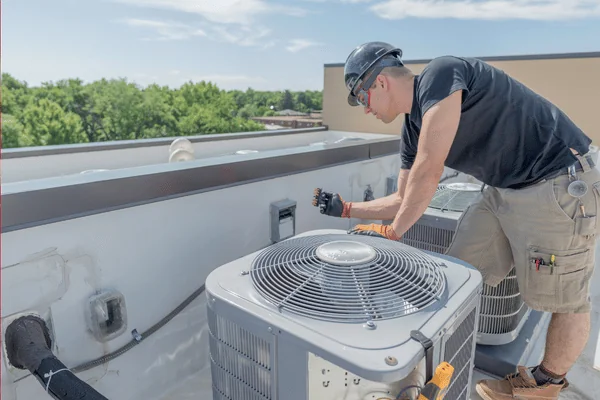
- System Accessibility: If your unit is located on a steep-pitched roof or tucked into a tight crawlspace in an older Nob Hill home, expect higher labor costs. Technicians often need additional safety equipment or a second set of hands just to access the unit safely.
- 2026 Refrigerant Regulations: With the phase-out of high-GWP refrigerants like R-410A, the cost of topping off an older system has skyrocketed. If your unit requires these older fluids, the material cost alone can sometimes exceed the labor.
- Warranty Status: A broken blower motor might cost $600 to repair for one homeowner and only $200 for another, simply because the part is covered under a manufacturer’s warranty. Most local pros will check your serial number first to see if you are only responsible for the labor.
How Timing and Local Environment Impact Pricing
If you wait until a 100°F day in July to call, you aren’t just paying for a repair; you’re paying for the peak-demand surge. HVAC service costs are most manageable during the shoulder seasons (spring and fall) when technicians have more flexible schedules.
Additionally, the fine desert sand and silt common in New Mexico can clog condenser coils and grind down blower motor bearings faster than in more humid climates. Furthermore, our intense high-altitude UV exposure causes plastic components and wiring insulation to become brittle and crack years earlier than in other regions. A repair that costs $300 elsewhere might involve extra labor hours here just to clear debris or replace sun-damaged electrical lines.
AC Repair vs. Furnace Repair Cost
It’s helpful to view your system as two different machines that share a brain (the thermostat) and lungs (the blower motor). While they work together, their repair profiles differ.
- AC Repair: Often driven by electrical components like capacitors or contactors, or mechanical issues like refrigerant leaks. Because our summers are so intense, cooling systems are pushed to their absolute limit, making costs a more frequent concern for local homeowners.
- Furnace Repair: Heating repairs often center on safety. Issues with ignitors, flame sensors, or—more seriously—the heat exchanger require precise calibration to prevent carbon monoxide risks. While furnace calls may be less frequent, the specialized nature of gas-line work can drive the costs higher than a simple electrical swap on an AC unit.
Related: The Benefits of Same-Day AC Repairs
Which Repairs Tend to Cost More Over Time?
Major mechanical failures, like a seized compressor or a cracked heat exchanger, are the engine failures of the HVAC world. These are the repairs that often lead to the repair vs. replace conversation, as the cost of the part and the labor can approach half the value of a new system.
The Financial Hidden Costs of Delayed Service
The most expensive repair is the one you ignored six months ago. HVAC systems are interconnected; when a small, $150 capacitor begins to fail, it forces the expensive compressor to work twice as hard to start. Eventually, the capacitor dies—and takes the compressor with it.
How Preventive Maintenance Helps Control Costs
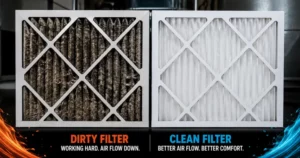
The best way to lower your average HVAC repair cost over the life of your home is through consistent maintenance. Think of it as an oil change for your house.
- Restored Efficiency: Clean coils mean the system runs shorter cycles, saving you on PNM or New Mexico Gas Company bills.
- Early Detection: A technician can spot a frayed wire or a slow refrigerant leak before it leaves you stranded on a holiday weekend.
- Warranty Protection: Most manufacturers in 2026 require proof of annual service to honor parts warranties.
When HVAC Repair Is More Cost-Effective Than Replacement
As systems age, you’ll eventually hit a tipping point. A common rule of thumb is the $5,000 Rule: multiply the unit’s age by the repair estimate. If the total exceeds $5,000, a replacement is likely the more cost-effective long-term move.
Getting an Accurate HVAC Repair Estimate in Albuquerque
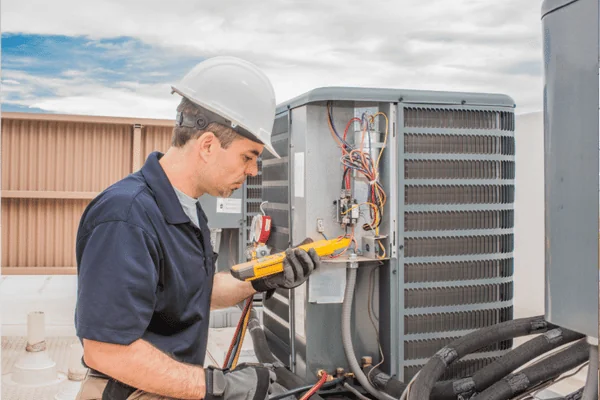
To get a trustworthy repair estimate, look for contractors who provide a Level 1 diagnostic. This should include a clear breakdown of:
- Labor hours (standard Albuquerque rates for 2026 range from $85 to $150/hr).
- Specific part numbers and their costs.
- A safety inspection of the electrical and/or gas connections.
Avoid over-the-phone quotes. A real professional needs to see the airflow and the specific wear patterns of your New Mexico home to give you an honest number.
Investing in Reliable HVAC Repair for Long-Term Comfort
At the end of the day, you aren’t just paying for a fan motor or a handful of refrigerant—you’re paying for the peace of mind that your home will remain a sanctuary against the high-desert elements.

Get an HVAC repair cost estimate in Albuquerque by reaching out to a certified local professional who knows our climate. By addressing issues early and choosing quality repairs over quick fixes, you protect your home’s value and your family’s comfort. Call our HVAC repair experts today to get started!
Frequently Asked Questions
1. How can I tell if a repair is worth it on an older system?
If your system still uses R-22 (which is phased out), even a minor leak repair can be prohibitively expensive. Generally, if the system is over 12 years old and the repair costs more than 30% of a new unit, replacing it with a modern, high-SEER2 system is usually the better investment for Albuquerque homeowners.
2. Do Albuquerque’s monsoons affect HVAC repair costs?
Yes. During the monsoon season, high winds blow heavy dust and organic debris into outdoor condensers. If this isn’t cleaned, it acts like a blanket, causing the system to overheat. This thermal stress is a leading cause of premature failure of fan motors and compressors in New Mexico, often resulting in higher-than-average repair bills for those who skip seasonal cleaning.
3. What is a diagnostic fee, and does it count toward my repair?
A diagnostic fee covers the technician’s time, expertise, and specialized tools required to find the root cause of a problem. In the Albuquerque market, some companies may apply this fee to the final repair cost if you hire them to do the work, while others keep it separate. Always ask for this policy upfront to avoid surprises.
4. Are there specific 2026 regulations I should know about?
2026 has seen a push toward higher-efficiency standards (SEER2) and a transition to newer refrigerants such as R-454B. This means that older parts are becoming more expensive to source. If your technician mentions that your system is non-compliant with new standards, it doesn’t mean you must replace it, but it does mean future repairs will likely cost more.
5. Why is my energy bill still high after a repair?
A repair fixes a broken part, but it doesn’t always restore the system’s overall efficiency. If your coils are still dirty or your ductwork has leaks (common in older Albuquerque homes), the system will still work too hard. For the best ROI, ask your technician to check your airflow and duct integrity during any repair visit.
6. How can I verify if an Albuquerque technician is qualified?
In New Mexico, HVAC contractors must be licensed by the Construction Industries Division (look for an MM-3 or MM-98 classification). Additionally, any tech handling refrigerant must have an EPA 608 Certification.