By Miguel Garcia, Owner
Commercial heating systems range from rooftop units and furnaces to boilers, heat pumps, radiant heat, unit heaters, VRF systems and makeup air units. Cost depends on the building’s size, its heating and cooling needs, efficiency goals and code work, and the running cost counts as much as the install price. Only a quote for your own building shows what your heating work costs. Here is how they compare.
Key Takeaways
- Weigh running costs alongside the install price, because you pay to operate the system every season it heats the building.
- Settle how the building will make heat and how it will reach each space before you start comparing equipment models.
- Match the system to what it warms, whether that is air moved through ducts or water carried through pipes.
- Doubt any claim that one system wins on efficiency everywhere. Your specific building decides which one runs cheapest.
- In the high desert, account for how altitude affects gas combustion.
What drives the cost to install and run a commercial heating system?
A commercial heating system carries two costs: the install, then every season of running it. The right system for a building turns on the size of the space, its heating and cooling needs, your efficiency goals and your budget, and the long-term operating cost of each type belongs in that decision. Installation and ventilation work must also meet the mechanical code your city or county enforces, often based on the International Mechanical Code with local amendments, so ask each contractor which code and permits apply to your building.
| Cost driver | What it changes at install | What it changes in running cost |
|---|---|---|
| Size of the space | Equipment capacity, length of duct or pipe runs | Fuel or power burned each season |
| Heating and cooling needs | One unit, or separate equipment per zone | Hours each zone’s equipment runs |
| Efficiency goals | Price of higher-efficiency equipment and controls | Energy bills over the system’s life |
| Code requirements | Ventilation and venting work in the design | Outside air the system has to heat |
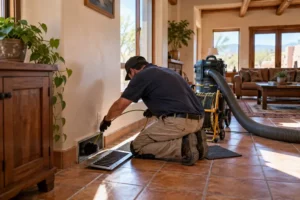
Airflow counts on the running side too. Dirty ducts make equipment run longer to warm the same rooms, which is where commercial vent cleaning affects what the system costs to operate.
What are you deciding when you pick heat for a commercial building?
You are choosing how the building makes heat and how that heat reaches each space. Controls come next, and the equipment model after that.
- Heat source: burning gas, or using electricity to make or move heat. This sets which utility you pay and what venting the building needs.
- Delivery: warm air through ducts, hot water through pipes, or refrigerant lines to indoor units. Existing ductwork or a boiler loop often narrows this choice.
- Control: one thermostat for the whole floor, or separate zones for spaces used at different hours.
Each answer narrows the next. A building with no ducts rules out a furnace unless you pay to add them, and gas heat brings flue work that an electric system skips. A commercial heating service visit should settle all three for your building.
How do rooftop units, furnaces, boilers, heat pumps and radiant heat differ?
They differ in where the equipment sits, what it warms and which building it suits.
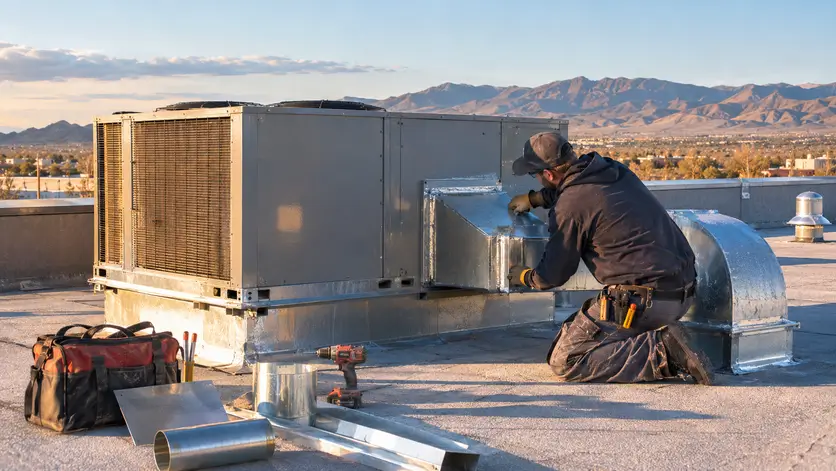
- Rooftop units: one packaged cabinet on the roof heats and cools, feeding ducts below. A common fit for flat-roofed retail and offices, since one unit covers both seasons.
- Furnaces: indoor units that burn gas to heat air for the ductwork. They suit buildings that already have ducts and a gas line, with running cost tied to gas prices.
- Boilers: heat water and pump it through pipes to radiators or baseboard. Quiet, even heat where a pipe loop exists, but costly to add from scratch, and they do not cool.
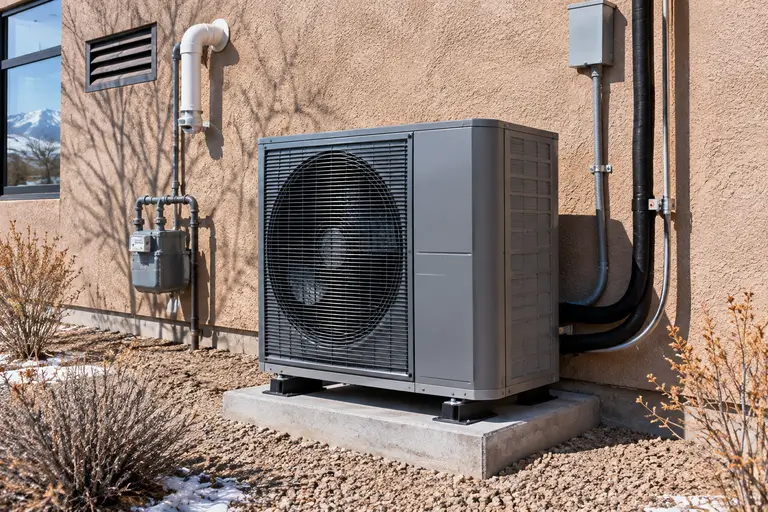
- Heat pumps: electric units that move heat from outdoor air inside, then reverse to cool. Efficient in mild weather, but output falls on the coldest nights.
- Radiant heat: tubing or elements in floors or panels warm people directly, with no blown air. Suits high ceilings and new slabs, and is expensive to retrofit.
- Unit heaters: ceiling-hung gas or electric heaters that warm one open space, such as a warehouse or shop bay, without ductwork. Low install cost, heat only.
- VRF systems: electric heat pump systems that run refrigerant lines from outdoor units to many indoor units, so zones heat or cool on their own. A higher install price, worth weighing where spaces keep different hours.
- Makeup air units: heat the outside air that replaces what exhaust fans pull out, such as from a kitchen hood. The exhaust sets the need, so this adds to your main heat rather than replacing it.
Start with what the building already has: existing ducts favor a rooftop unit, furnace or heat pump, and an existing pipe loop favors a boiler. Because rooftop units, heat pumps and VRF also cool, price them alongside commercial cooling.
Which system is most efficient to run, and why does the building matter?
No single system is the most efficient to run in every building. The building decides. Equipment delivers its rated efficiency only when it is sized to the space’s heat loss, which depends on things like insulation and ceiling height. An oversized unit short-cycles, switching on and off in quick bursts, and leaky ducts lose heat before it reaches a room. Ask for the heat loss calculation behind any size you are quoted. After installation, a year-round maintenance plan keeps a new system running at that efficiency.
How does high altitude change the heating choice?
Altitude changes how gas equipment burns, and that belongs in the choice for a building in Albuquerque or any of the towns around it.
Thinner air carries less oxygen in each cubic foot. Any gas-fired unit burns its fuel with that air, so at elevation it needs the manufacturer’s high-altitude setup to burn cleanly. That usually means different gas orifices and a check of gas pressure. The setup also lowers the unit’s output, which installers call derating. When you get a quote, ask whether the unit is approved for high-altitude use and what its output is after derating. The towns we serve, from Los Lunas to Santa Fe, do not all sit at one elevation, so the setup is matched to the building’s own site.
An electric heat pump burns nothing, so altitude leaves its combustion question out. It does draw heat from outdoor air, though. Ask how a quoted model performs on your coldest nights.
What maintenance, ventilation and air quality checks does the system need?
The checks depend on the system type, so ask for the list that matches your equipment before the first cold snap. Gas units need the flue and heat exchanger inspected for blockages and for cracks that can leak carbon monoxide. A heat pump has no flue, but its refrigerant charge and defrost controls still get tested. For ventilation, confirm the outside-air damper opens the way the design calls for. A stuck one leaves rooms stuffy. Filters set much of the air quality, and how often they change depends on dust and occupancy.
How do you choose a system and the contractor who sizes it?
Choose the contractor before the equipment. The right system comes out of a bid from someone who has measured your building, and you can only judge that bid if it shows its work. Hold every bid you compare to the same lines:
- Equipment: the model and rated output of each unit, so two bids for different brands can still be matched.
- Distribution: which runs of duct or pipe are new and which existing runs are reused.
- Venting and controls: any flue or exhaust changes, plus the thermostats or zones planned.
- Permits and inspection: who arranges them, so that step is priced rather than assumed.
A bid that gives one lump price hides where two quotes differ.
Check the license number on the bid before you sign. Beyond Heating and Cooling holds license #410899.
We are licensed and insured, and family-operated since 2018. Financing is available on commercial heating work. To start, send us your building’s plans or call (505) 382-1344, and we will write up an itemized scope for it.
Sources
- IMC – ICC, International Code Council, retrieved 2026-11-09.